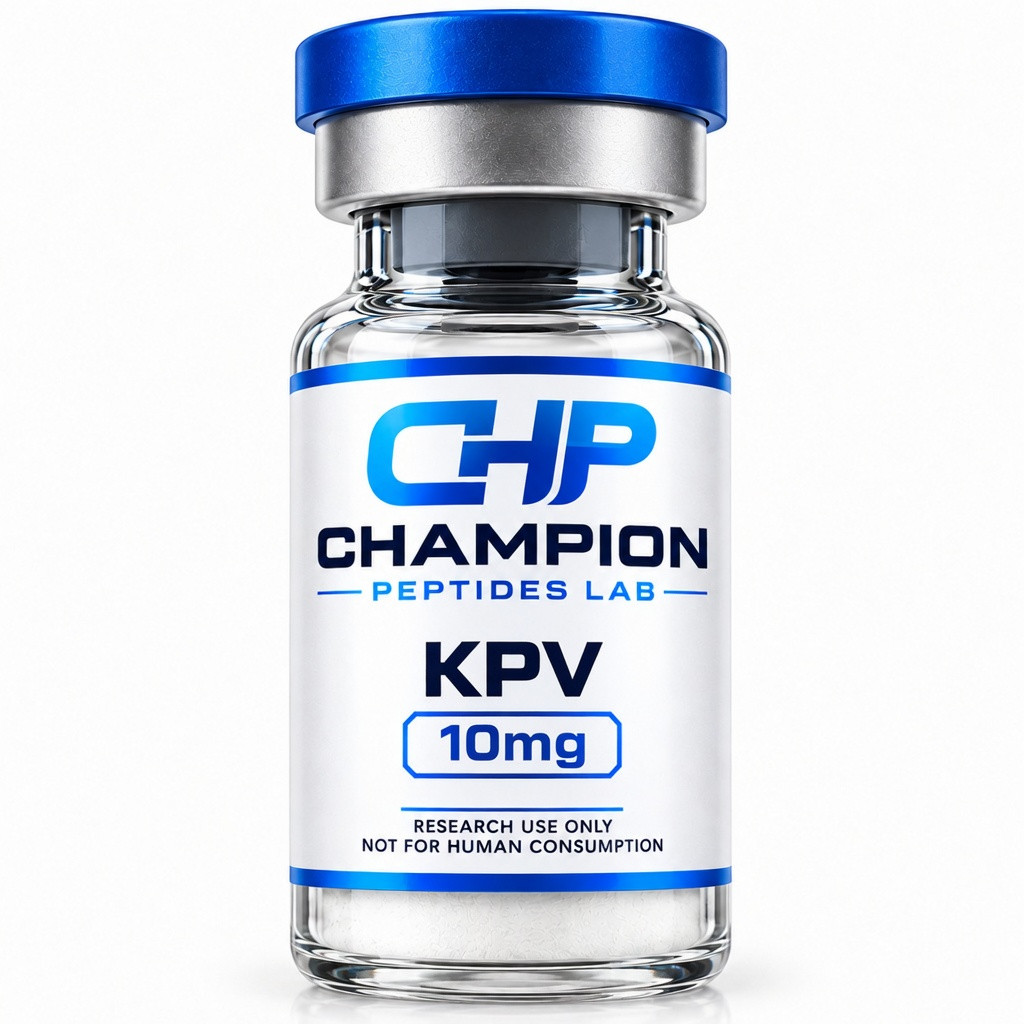
KPV 10MG

Price range: $55.00 through $99.00

Highly pure KPV 10mg lyophilized powder optimized for cellular inflammation, mucosal repair, and microbial research.

SKU: 3180 Category:

Description

Premium KPV 10mg Lyophilized Powder – Champion Peptides

Buy high-quality KPV online from Champion Peptides. Engineered for molecular stability and maximum purity, our 10mg KPV vials offer researchers a potent, non-melanotropic tripeptide. It is built to advance scientific studies in cellular inflammation, mucosal tissue repair, and antimicrobial defense.

The Scientific Foundation of KPV Tripeptide

KPV. Lysine-Proline-Valine. It is a naturally occurring tripeptide that has generated massive interest in scientific and medical research circles. Structurally, KPV is the C-terminal tripeptide of alpha-Melanocyte-Stimulating Hormone (alpha-MSH). This is a larger peptide hormone from the melanocortin family. Alpha-MSH comes from the cleavage of pro-opiomelanocortin (POMC) and is well-known for its role in skin pigmentation, appetite regulation, and immune system modulation.

But there is a catch. Alpha-MSH interacts with multiple melanocortin receptors — specifically MC1R through MC5R — which can lead to systemic effects like increased skin pigmentation. KPV is different. It lacks the central amino acid sequence required to bind strongly to the melanocortin-1 receptor (MC1R). Because of this, it does not cause skin darkening. Instead, KPV keeps the potent anti-inflammatory and antimicrobial properties of its parent molecule without triggering melanotropic activity. This highly selective profile makes KPV an exceptional candidate for researchers investigating targeted anti-inflammatory pathways without the annoying variable of altered skin tone.

The molecular structure of KPV is H-Lys-Pro-Val-OH. Its molecular weight sits at approximately 385.5 g/mol. It is small. Yet, this tripeptide shows remarkable structural stability and bioavailability. Because it is a short-chain peptide, it is less susceptible to rapid enzymatic degradation than larger, more complex proteins. This structural resilience allows researchers to test various experimental delivery methods — including transdermal, mucosal, and systemic pathways in animal models. When looking to order KPV online, researchers prioritize this structural integrity. Minor variations in synthesis can drastically alter the peptide’s stability and experimental outcomes.

Cellular Mechanisms and Pathways of KPV

Why is KPV such a highly sought-after compound in modern biochemistry? To answer this, we have to look closely at its primary intracellular mechanisms. The most prominent pathway through which KPV works is the inhibition of Nuclear Factor Kappa B (NF-kB). NF-kB is a master transcription factor. It plays a pivotal role in regulating the cellular immune response, cytokine production, and cell survival.

In a resting cell, NF-kB is held in an inactive state within the cytoplasm by inhibitory proteins known as IkB (Inhibitor of kappa B). When the cell encounters pro-inflammatory stimuli — such as bacterial lipopolysaccharides (LPS), tumor necrosis factor-alpha (TNF-alpha), or interleukin-1 beta (IL-1 beta) — kinases are activated. These kinases phosphorylate IkB, marking it for degradation. Once freed, NF-kB moves straight into the nucleus. There, it binds to specific DNA sequences and increases the transcription of dozens of pro-inflammatory genes, including IL-1, IL-6, IL-8, TNF-alpha, and cyclooxygenase-2 (COX-2).

KPV stops this cascade. Research indicates that KPV can enter target cells, potentially aided by specialized peptide transporters like PepT1 (Peptide Transporter 1), which is highly expressed in intestinal epithelial cells. Once inside the cytoplasm, KPV blocks the phosphorylation and degradation of IkB. This prevents the translocation of NF-kB into the nucleus. By keeping NF-kB locked in its inactive state, KPV significantly dampens the inflammatory cascade at its source. This direct intracellular action explains why KPV is widely studied as a potential therapeutic agent for chronic inflammatory conditions.

KPV interacts with importin proteins, which transport macromolecules across the nuclear membrane. By modulating nuclear import machinery, KPV may further limit the genomic access of any NF-kB molecules that manage to escape cytoplasmic inhibition. This dual-layered mechanism of action highlights the sophistication of this simple tripeptide and explains why laboratories worldwide seek out high-purity KPV for their cellular assays.

Promising Frontiers in KPV Research

The unique chemical structure and mechanical pathways of KPV open up a broad spectrum of research applications. Investigators across various disciplines — including gastroenterology, dermatology, immunology, and microbiology — are actively using KPV to study its effects on tissue homeostasis and pathogen defense.

Inflammatory Bowel Disease and Mucosal Healing

One of the most active areas of KPV research is in gastroenterology, specifically focusing on inflammatory bowel diseases (IBD) such as Crohn’s disease and ulcerative colitis. The intestinal lining relies heavily on PepT1 transporters to absorb dietary peptides. Because PepT1 is significantly increased during chronic intestinal inflammation, it serves as an ideal entry portal for KPV.

In animal models of colitis, researchers have observed that KPV administration leads to a substantial reduction in mucosal inflammation. By entering the inflamed intestinal epithelial cells via PepT1, KPV reduces the localized production of pro-inflammatory cytokines that drive mucosal tissue destruction. Also, KPV has been shown to speed up the repair of the mucosal barrier by promoting cell migration and restoring the integrity of tight junction proteins like occludin and zonula occludens-1. This dual action — reducing active inflammation while actively supporting the physical restoration of the gut barrier — makes KPV a primary subject of study for novel mucosal healing therapies.

Dermatology, Wound Healing, and Fibrosis

In dermatological research, KPV is studied for its ability to modulate skin inflammation, accelerate wound healing, and prevent excessive scarring (fibrosis). The skin is the body’s first line of defense. It is highly susceptible to inflammatory disorders such as psoriasis, dermatitis, and eczema.

When applied to experimental models of skin injury, KPV reduces the infiltration of inflammatory cells — such as neutrophils and macrophages — into the wound site. While an initial inflammatory phase is necessary for wound clearance, prolonged inflammation leads to tissue damage and delayed healing. KPV helps transition the wound environment from the inflammatory phase to the proliferative and remodeling phases more efficiently.

KPV plays an interesting role in modulating collagen deposition. Excessive or disorganized collagen synthesis by myofibroblasts leads to the formation of hypertrophic scars and keloids. KPV research suggests that the peptide can reduce the expression of transforming growth factor-beta (TGF-beta), a primary driver of fibrogenic pathways. By balancing collagen production, KPV supports cleaner, more functional tissue regeneration, making it a valuable tool for researchers studying wound healing biochemistry.

Antimicrobial and Mycological Research

Beyond its anti-inflammatory properties, KPV possesses direct antimicrobial capabilities, particularly against fungal pathogens like Candida albicans. Fungal infections pose a significant challenge in clinical settings, especially in immunocompromised subjects or cases involving biofilms that resist traditional antifungal drugs.

Studies show that KPV can directly inhibit the growth of Candida albicans. The peptide is believed to disrupt the cell membrane of the yeast, leading to metabolic dysfunction and cell death. Interestingly, KPV also prevents the morphological transition of Candida albicans from its yeast form to its highly invasive filamentous hyphal form. This transition is a key factor that allows the fungus to invade host tissues. By halting this phenotypic switch, KPV limits the pathogen’s ability to establish deep-seated infections.

Importantly, KPV exhibits these antimicrobial effects at concentrations that do not cause toxicity to host mammalian cells. This selective toxicity makes it an incredibly promising candidate for research into novel, non-traditional antimicrobial agents that can complement existing therapeutic regimens.

Why Champion Peptides is the Industry Standard

In high-level scientific research, the quality and purity of your chemical compounds are best. Substandard peptides containing synthetic impurities, residual solvents, or incorrect peptide sequences can completely invalidate experimental data. This leads to lost time and wasted resources. If you are searching for where to buy KPV that meets the absolute highest scientific standards, Champion Peptides is your trusted partner.

At Champion Peptides, we use advanced automated solid-phase peptide synthesis (SPPS) protocols to construct our KPV tripeptide. Each step of the synthesis process is carefully monitored, from initial amino acid coupling to final cleavage and deprotection. Following synthesis, the crude peptide undergoes extensive chromatographic purification using preparative High-Performance Liquid Chromatography (HPLC). This process separates the desired KPV sequence from any truncated sequences or chemical byproducts, ensuring a final purity level that consistently exceeds 99%.

Once purified, our KPV is subjected to rigorous analytical testing. We use analytical HPLC to confirm the purity profile and Mass Spectrometry (MS) to verify the exact molecular weight and chemical identity of the peptide. This empirical data ensures that every vial of KPV you receive contains precisely what is on the label, free from contaminants or structural anomalies.

The final step in our manufacturing process is sterile filtration and lyophilization (freeze-drying). Lyophilization removes moisture from the peptide solution under a deep vacuum, transforming it into a highly stable, crystalline powder. This dry state dramatically reduces the rate of chemical degradation, allowing the peptide to be shipped and stored safely. Each vial is flushed with an inert gas, such as nitrogen or argon, and sealed with a medical-grade stopper and flip-off cap to prevent oxidation and moisture ingress. This dedication to quality control is why researchers looking for the highest quality KPV consistently choose Champion Peptides.

Understanding the 10MG Variation

Our KPV is offered in a highly versatile 10mg variation. For laboratory researchers, selecting the correct vial size is a best decision that impacts both experimental design and budget efficiency. The 10mg vial size represents an optimal balance between scientific utility, storage stability, and cost-effectiveness.

In laboratory settings, KPV is typically reconstituted into a liquid solution prior to use in in vitro or in vivo assays. Because peptides are inherently more stable in their dry, lyophilized state than in solution, it is highly advantageous to work with smaller, fresh batches rather than reconstituting massive quantities at once. A 10mg vial allows researchers to prepare precise, highly concentrated mother liquors that can be diluted down to the exact working concentrations required for specific assays, minimizing the time the peptide spends in a degraded liquid state.

The 10mg variation offers exceptional flexibility when calculating reconstitution ratios. Whether your protocol calls for micromolar concentrations in cell culture wells or milligram-per-kilogram dosing in animal models, a 10mg quantity simplifies the mathematics of laboratory preparation. By choosing our 10mg vials, you can ensure that your laboratory always has access to fresh, fully potent peptide solutions, maximizing the accuracy and reproducibility of your experimental data.

Reconstitution, Handling, and Storage Guidelines

To preserve the molecular integrity of your premium KPV, proper laboratory handling, reconstitution, and storage protocols must be strictly followed. Peptides are delicate molecules held together by amide bonds, which can be broken down by physical stress, temperature fluctuations, and chemical contaminants.

Reconstitution Protocol

Reconstitution is the process of adding a sterile liquid solvent (diluent) to the lyophilized peptide powder to create a solution. The choice of diluent depends on your specific experimental design:

  • Bacteriostatic Water: For multi-use vials where the solution will be accessed multiple times over several days or weeks, bacteriostatic water (sterile water containing 0.9% benzyl alcohol) is highly recommended. The benzyl alcohol acts as a preservative, inhibiting the growth of potential bacterial contaminants.
  • Sterile Water for Injection (WFI) or Normal Saline: If your experimental model is sensitive to benzyl alcohol, sterile water or sterile 0.9% sodium chloride solution can be used. These solutions should ideally be used immediately or aliquoted and frozen to prevent bacterial growth.
  • Phosphate-Buffered Saline (PBS): For physiological assays or cell culture studies requiring a stable pH, sterile PBS can be utilized.

To reconstitute your 10mg KPV vial:

  1. Allow the lyophilized vial to reach room temperature before reconstitution. This prevents condensation from forming inside the vial, which can introduce moisture and degrade the peptide.
  2. Clean the rubber stopper of the vial with an isopropyl alcohol swab and allow it to air dry.
  3. Using a sterile syringe, draw up your desired volume of diluent. For example, adding 2mL of diluent to a 10mg vial will yield a concentration of 5mg/mL (or 500mcg per 0.1mL).
  4. Insert the needle through the center of the rubber stopper. Aim the needle toward the glass wall of the vial rather than directly at the lyophilized powder.
  5. Slowly inject the diluent down the side of the vial. Injecting the liquid too rapidly or directly onto the powder can cause physical shear stress, potentially damaging the peptide’s structure.
  6. Gently swirl the vial in a circular motion until the powder is completely dissolved. Never shake the vial. Shaking introduces air bubbles and mechanical forces that can denature the peptide.
  7. Once fully dissolved, the solution should be completely clear and free of visible particles.

Storage and Stability

Proper storage temperatures are critical to preventing peptide degradation over time:

  • Lyophilized Powder: In its dry, freeze-dried state, KPV is highly stable. For short-term storage (under 1-2 months), the vials can be kept in a standard refrigerator at 2°C to 8°C. For long-term storage (up to 2 years), the vials should be stored in a frost-free freezer at -20°C or -80°C.
  • Reconstituted Solution: Once reconstituted, the peptide is much more vulnerable to degradation. Reconstituted KPV should be stored in a refrigerator at 2°C to 8°C. If reconstituted with bacteriostatic water, the solution remains stable for up to 21-28 days. If reconstituted with sterile water without preservatives, it should be used immediately or divided into single-use aliquots and frozen at -20°C to avoid repeated freeze-thaw cycles, which rapidly degrade the peptide.

Key Benefits and Features

  • Ultra-High Purity Profile: Synthesized utilizing state-of-the-art solid-phase peptide synthesis and purified via preparative HPLC to guarantee a purity level of 99% or higher.
  • Verified Identity: Every batch undergoes analytical HPLC and Mass Spectrometry testing to confirm exact molecular weight and chemical structure, ensuring highly reproducible research data.
  • Targeted Anti-Inflammatory Action: Acts as a potent cellular anti-inflammatory agent by directly inhibiting the NF-kB transcription pathway without binding to the MC1R receptor, avoiding pigmentary side effects.
  • Enhanced Mucosal Barrier Support: Heavily researched for its ability to enter mucosal cells via PepT1 transporters, making it a leading compound for inflammatory bowel disease and gut barrier studies.
  • Direct Antimicrobial Activity: Exhibits distinct, non-toxic antimicrobial properties, particularly in suppressing the growth and morphological transition of Candida albicans.
  • Optimized Lyophilization: Freeze-dried under sterile conditions and vacuum-sealed with nitrogen flushing to maximize shelf life, prevent oxidation, and ensure thermal stability during transit.
  • Versatile 10mg Concentration: The ideal vial size for precise laboratory dilutions, reducing peptide waste and allowing researchers to maintain fresh reconstituted solutions.

Key Buyer Questions and Answers

What is KPV?
KPV is a naturally occurring tripeptide consisting of the amino acids Lysine, Proline, and Valine. It represents the C-terminal fragment of alpha-Melanocyte-Stimulating Hormone (alpha-MSH). It is highly regarded in scientific research for its potent anti-inflammatory, wound-healing, and antimicrobial properties, notably without inducing the skin-darkening effects associated with full-length alpha-MSH.

Where can I buy KPV online?
If you are looking for where to buy KPV online for laboratory research, Champion Peptides is the top source. We specialize in producing research-grade peptides synthesized to the highest analytical standards. Our online store offers secure payment options, rapid shipping, and fully verified product purity to support your laboratory’s needs.

What factors influence the KPV price?
The KPV price is primarily determined by the quality of the synthesis process, the purity of the final product, and the analytical testing performed on each batch. While cheap, unverified peptides are available on the market, they often contain impurities that can ruin research projects. Champion Peptides offers competitive pricing for premium, HPLC-tested KPV, ensuring you receive the best value for highly reliable data.

Is this product suitable for human consumption?
No. All products sold by Champion Peptides, including our KPV 10mg vials, are strictly for laboratory research, in vitro assays, and animal study purposes. They are not intended for human diagnostic, therapeutic, or recreational use. Proper laboratory safety protocols and protective gear should always be utilized when handling these compounds.

How does KPV differ from alpha-MSH?
Alpha-MSH is a 13-amino-acid peptide hormone that binds to various melanocortin receptors, influencing pigmentation, appetite, and systemic inflammation. KPV is a 3-amino-acid segment (the C-terminus) of alpha-MSH. KPV does not bind to the MC1R receptor responsible for melanin production, meaning it provides the anti-inflammatory benefits of alpha-MSH without causing skin tanning.

What is the shelf life of lyophilized KPV?
When stored in a standard laboratory freezer at -20°C or below, lyophilized KPV powder can remain stable for up to two years. At refrigerated temperatures (2°C to 8°C), it remains stable for several months. It is highly recommended to keep the vials away from direct light and moisture.

Can KPV be frozen after reconstitution?
Yes, but with precautions. If you need to store reconstituted KPV for an extended period, you should divide the solution into single-use aliquots and freeze them at -20°C. Avoid repeated freeze-thaw cycles, as the physical expansion and contraction of the liquid can break the peptide’s delicate chemical bonds.

Reconstitution Volume Calculation
To calculate your concentration, divide the total milligram amount of the peptide by the volume of diluent added. For our 10mg vial:
* Adding **1mL** of diluent results in a concentration of **10mg/mL**.
* Adding **2mL** of diluent results in a concentration of **5mg/mL**.
* Adding **5mL** of diluent results in a concentration of **2mg/mL**.

Why is KPV researched for gut health?
KPV is a substrate for the PepT1 transporter, which is highly active in the intestinal tract, especially during inflammatory states. This allows KPV to be actively absorbed into inflamed gut epithelial cells, where it can directly block the NF-kB pathway, reducing localized inflammation and promoting the healing of the mucosal barrier.

What quality control tests are performed on Champion Peptides KPV?
Every batch of our premium KPV undergoes High-Performance Liquid Chromatography (HPLC) to confirm that the purity exceeds 99%. We also conduct Mass Spectrometry (MS) to verify the precise molecular identity and weight of the tripeptide. This ensures that your laboratory receives only the highest quality KPV for sale.

How is KPV shipped?
Our lyophilized KPV is highly stable at ambient temperatures, allowing it to be shipped safely under standard transit conditions. Once received at your facility, the vials should be placed in appropriate refrigerated or frozen storage as outlined in our handling guidelines to ensure long-term stability.

Can KPV be used in combination with other research peptides?
In many experimental designs, researchers study KPV in conjunction with other peptides or compounds (such as BPC-157 or TB-500) to observe synergistic effects on tissue repair, inflammation, and wound healing. The small size and stable nature of KPV make it highly compatible with a wide range of co-administration protocols in laboratory models.

Additional information

Quantity

10 Vials, 15 Vials, 20 Vials

There are no reviews yet.

Be the first to review “KPV 10MG”

Your email address will not be published. Required fields are marked *

Share