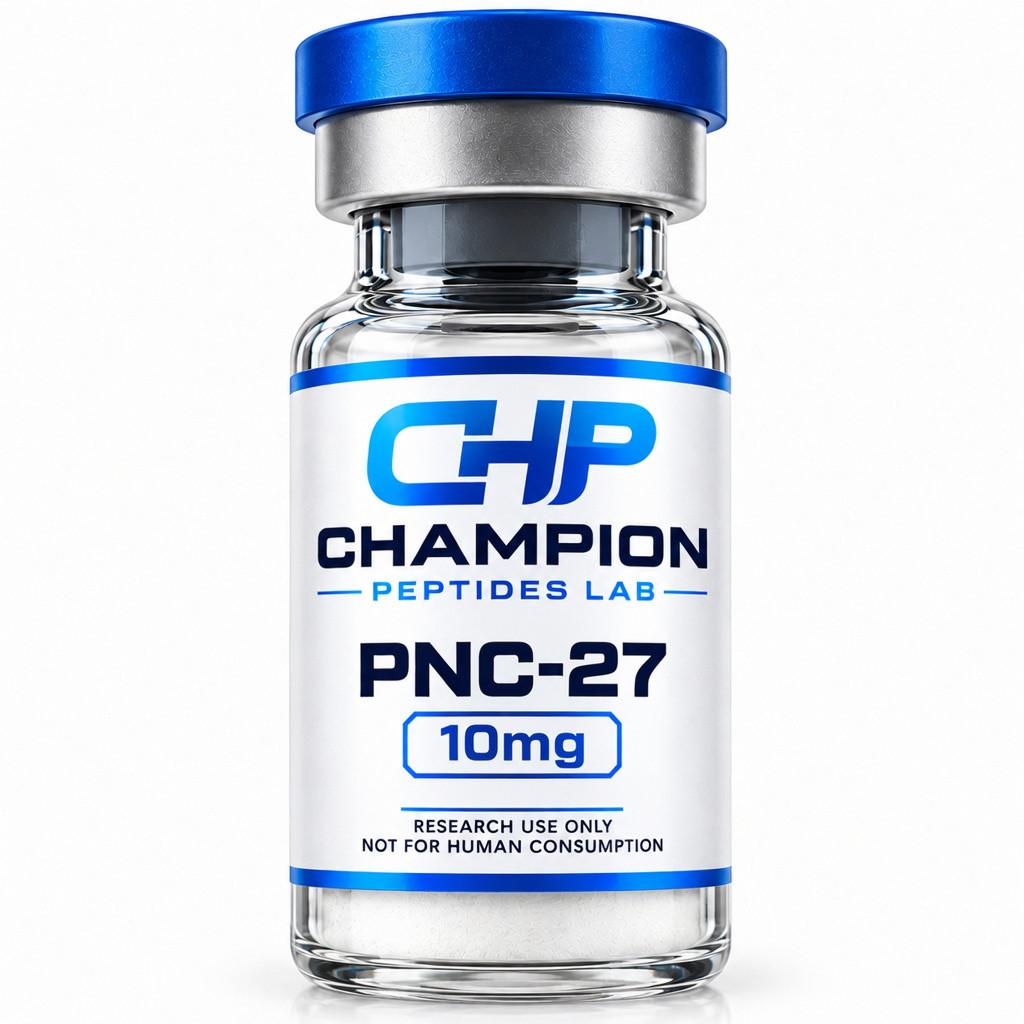
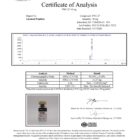
PNC-27 10MG

Price range: $155.00 through $279.00

Get premium PNC-27 10MG from Champion Peptides. Engineered for precise membrane-active research, our lyophilized peptide is HPLC-verified at >98% purity.

SKU: 3154 Category:

Description

Champion Peptides Premium PNC-27 10MG: High-Purity Research Compound

Push past the boundaries of cellular biology research with Champion Peptides’ premium PNC-27 10MG. This synthetically optimized chimeric peptide is engineered to target HDM2-expressing membranes with high precision.

Explore the scientific potential of this cutting-edge research agent. It is manufactured to the highest industry standards for structural integrity, purity, and experimental reproducibility.

Understanding PNC-27: The Membrane-Active p53-Derived Peptide

PNC-27 is a specialized, 32-amino-acid chimeric peptide. It has captured the attention of oncology researchers, molecular biologists, and biochemistry laboratories globally. It is unique. Structurally, the peptide contains two distinct, critical domains. First, a targeting domain derived from the p53 tumor suppressor protein. Second, a cell-penetrating domain derived from the Antennapedia homeodomain—commonly known as penetratin.

Let’s look at the sequence. The primary sequence of PNC-27 features residues 12 to 26 of the p53 protein. This specific region is known for high-affinity binding to the double minute 2 (MDM2) protein—often called human double minute 2 (HDM2). This p53-derived sequence is covalently linked at its carboxyl terminus to the 17-amino-acid penetratin sequence. It is a highly specific hybrid. This structure allows PNC-27 to interact with cellular membranes in a highly selective manner. It behaves differently from traditional chemotherapy agents or non-specific cytotoxic peptides.

Researchers want answers. As laboratories study cell-death pathways, membrane dynamics, and protein-protein interactions, the demand to buy PNC-27 online has grown. Champion Peptides meets this demand. We offer high-quality PNC-27 in a stable, lyophilized 10MG format. This ensures your laboratory has a reliable, highly pure compound for rigorous in vitro and in vivo scientific exploration.

The Science Behind PNC-27: Mechanism of Action and Cellular Target Identification

Why do researchers prioritize finding high-quality PNC-27? The answer lies in its mechanical pathway. The peptide operates through a membrane-dependent pathway that relies on the abnormal expression of HDM2 on the surface of specific cell lines. It is an unusual mechanism.

Under normal physiological conditions, the HDM2 protein is localized inside the cell. It stays mostly within the nucleus and cytoplasm of healthy cells. There, it acts as an E3 ubiquitin ligase to regulate and degrade the p53 tumor suppressor protein. It keeps things balanced. However, extensive oncological research reveals a different story in abnormal cells. Many cancer cell lines transport and express HDM2 directly on their outer cell membranes. It is a critical deviation.

When PNC-27 enters an environment containing these abnormal cells, its p53-derived domain binds specifically to the membrane-localized HDM2. This binding triggers a structural change. A conformational shift occurs. Because the targeting domain is attached to the hydrophobic penetratin sequence, this shift allows the peptide to insert itself directly into the lipid bilayer of the cell membrane. It slips right in.

Once inside the membrane, multiple PNC-27 molecules group together. They oligomerize. This process forms trans-membrane pores. These physical pores disrupt the osmotic balance of the target cell. Extracellular fluid rushes in. The cell swells. Then, the membrane ruptures. This process—rapid cytolysis or necrosis—bypasses the traditional apoptotic pathways. Many drug-resistant cell lines easily evade apoptosis, but they cannot survive this physical rupture. Healthy cells lack HDM2 on their outer membranes. They remain untouched in comparative laboratory studies. The selection is highly precise.

Why Researchers Buy PNC-27 Online for Laboratory Investigations

The pore-forming mechanism of PNC-27 makes it a best tool. It aids several branches of biochemical and biomedical research. When you look for PNC-27 for sale, you are investing in a highly versatile molecule. It is useful for several key research areas:

  • Selective Cytolysis Pathways: How do peptides destroy abnormal cells without triggering systemic apoptosis? This is a major question in molecular biology. PNC-27 provides a clear model for studying membrane-disrupting mechanisms. It yields clean data.
  • Protein-Protein Interactions: The binding affinity between the p53 activation domain and the HDM2 regulatory protein is a core focus in cell cycle studies. PNC-27 serves as an excellent probe. It helps analyze these binding dynamics in real-time.
  • Membrane Permeabilization Studies: Biophysics labs use PNC-27 to study lipid bilayer kinetics. It helps researchers observe pore formation and the structural requirements of cell-penetrating peptides (CPPs) linked to targeting ligands.
  • Models for Overcoming Drug Resistance: Traditional drugs fail when cell lines develop resistance to apoptotic triggers like cisplatin or doxorubicin. Because PNC-27 induces rapid necrosis instead of apoptosis, it is a highly useful model for testing resistant cell lines. It bypasses old barriers.

To get consistent results, quality matters. Contaminants, short peptide sequences, or residual TFA can alter membrane interaction kinetics. This ruins your data. Champion Peptides guarantees a purity level of 98% or greater. This gives your team absolute confidence in every trial.

Champion Peptides Quality Control: The Standard for Premium PNC-27

Sourcing research chemicals is risky. The reputation of your supplier matters as much as the molecule itself. At Champion Peptides, we know that serious scientific research requires absolute consistency. It requires sterility. It requires chemical accuracy.

We use advanced tools. Our premium PNC-27 is synthesized using state-of-the-art solid-phase peptide synthesis (SPPS) technology. After synthesis, the crude peptide undergoes purification via High-Performance Liquid Chromatography (HPLC). This step removes short-chain impurities, unreacted amino acids, and synthesis byproducts. Next, we analyze the purified peptide using Mass Spectrometry (MS). This confirms its precise molecular weight and amino acid sequence identity. No guesswork involved.

Each 10MG vial of PNC-27 undergoes sterile filtration. Then, it is lyophilized under a high vacuum. This freeze-drying process preserves the structural integrity of the peptide. It prevents hydrolysis. It stops enzymatic degradation during transit and long-term storage. When you buy PNC-27 online from Champion Peptides, you receive a highly stable, white crystalline powder. It is ready for precise reconstitution in your laboratory.

Understanding the PNC-27 10MG Variation: Reconstitution and Laboratory Preparation

Our 10MG variation of PNC-27 is designed for flexibility. It fits small-scale in vitro assays and larger in vivo animal models alike. Careful handling is required. Proper preparation preserves the biological activity of this delicate peptide.

Reconstitution Guidelines

To reconstitute your 10MG vial of PNC-27, follow strict aseptic techniques in your lab:

  • Temperature Equilibration: Let the lyophilized vial reach room temperature—around 20°C to 22°C—before adding any liquid. This simple step prevents condensation from forming inside the vial. Condensation degrades the peptide quickly.
  • Choosing the Solvent: For most cell cultures and biochemical assays, use sterile Phosphate-Buffered Saline (PBS, pH 7.4) or sterile bacteriostatic water. Do not use highly acidic or basic solutions. Extreme pH levels cause peptide denaturation or precipitation.
  • Reconstitution Math: To get a standard stock concentration of 1mg/mL, gently add 10mL of sterile solvent to the 10MG vial. For a more concentrated stock of 5mg/mL, add 2mL of solvent. Keep it simple.
  • Gentle Dissolution: Slowly inject the solvent down the inner glass wall of the vial. Do not spray it directly onto the powder. Gently swirl the vial in circles. Do not shake it. Vigorous shaking causes foaming and damages the peptide structure.

Storage Protocols

Once reconstituted, PNC-27 is highly sensitive. It reacts to temperature changes and enzymes.

  • Short-Term Storage: Keep reconstituted solutions in a refrigerator at 2°C to 8°C. They remain stable for up to 7 to 10 days.
  • Long-Term Storage: Divide the reconstituted stock solution into single-use aliquots. This avoids repeated freeze-thaw cycles. Store these aliquots at -20°C or -80°C. They can stay stable for several months.
  • Lyophilized Storage: Keep unopened vials of freeze-dried PNC-27 in a freezer at -20°C. They will remain stable for up to 24 months from the manufacturing date.

Key Benefits of Sourcing from Champion Peptides

  • High Chemical Purity: Every batch of our PNC-27 is verified to exceed 98% purity. We use HPLC and Mass Spectrometry analysis. You will not face unexplained variables from chemical impurities.
  • Optimized Lyophilization: Our advanced vacuum freeze-drying process ensures maximum stability, rapid dissolution, and an extended shelf-life.
  • Secure, Temperature-Controlled Shipping: We package our peptides in insulated, secure containers. This protects them from light, moisture, and temperature extremes during transit. They arrive in pristine condition.
  • Transparent Batch Testing: We believe in facts. Analytical reports and chromatograms are available upon request. Your team can verify the molecular profile before starting any work.
  • Competitive PNC-27 Price: We balance cost-efficiency with high-tier manufacturing. We offer competitive pricing for single vials and bulk orders.

PNC-27 Purchasing Details and FAQ

To help your procurement department make an informed choice, we have compiled key details regarding how to buy PNC-27 online safely for research purposes.

What is the difference between PNC-27 and PNC-28? Both are p53-derived peptides designed to target HDM2-expressing membranes. However, they differ in their amino acid lengths. PNC-27 contains residues 12-26 of the p53 protein. PNC-28 contains residues 17-26. Both connect to the same penetratin cell-penetrating domain. Research shows both have selective cytolytic properties, but PNC-27 is more widely studied. It has far more documentation.

Where is the best place to find PNC-27 for sale? The best source is a dedicated, reputable research chemical supplier like Champion Peptides. Buying from unverified marketplaces or general brokers is risky. You might get under-dosed, degraded, or impure compounds. We specialize in high-purity peptides with certified analytical data.

What factors influence the PNC-27 price? The price depends on synthesis complexity, the purification steps needed to reach >98% purity, and order volume. Cheaper options exist. But they often skip HPLC purification and mass spectrometry. Buying from Champion Peptides ensures your budget is spent on compounds that yield reproducible, publishable data.

Is PNC-27 suitable for human consumption? No. PNC-27 is sold strictly for laboratory research, in vitro assays, and in vivo animal studies. It is not approved by the FDA or any other health authority for human therapeutic or clinical use. Using this product outside a controlled laboratory is strictly prohibited.

How does the cell-penetrating peptide (CPP) domain work in PNC-27? The CPP domain is derived from penetratin—a 17-amino-acid peptide from the Antennapedia homeodomain. This domain is rich in basic amino acids like arginine and lysine. These positive charges interact electrostatically with the negatively charged lipids on the cell membrane. This helps the peptide insert into the lipid bilayer once the targeting domain binds to its target, HDM2.

What solvents should be avoided during reconstitution? Avoid strong organic solvents like high concentrations of DMSO, ethanol, or acetone unless your protocol requires them. They can alter the peptide’s secondary structure. This disrupts its ability to bind to HDM2 or insert into the membrane. Avoid non-sterile water. Microbial contamination degrades the peptide rapidly.

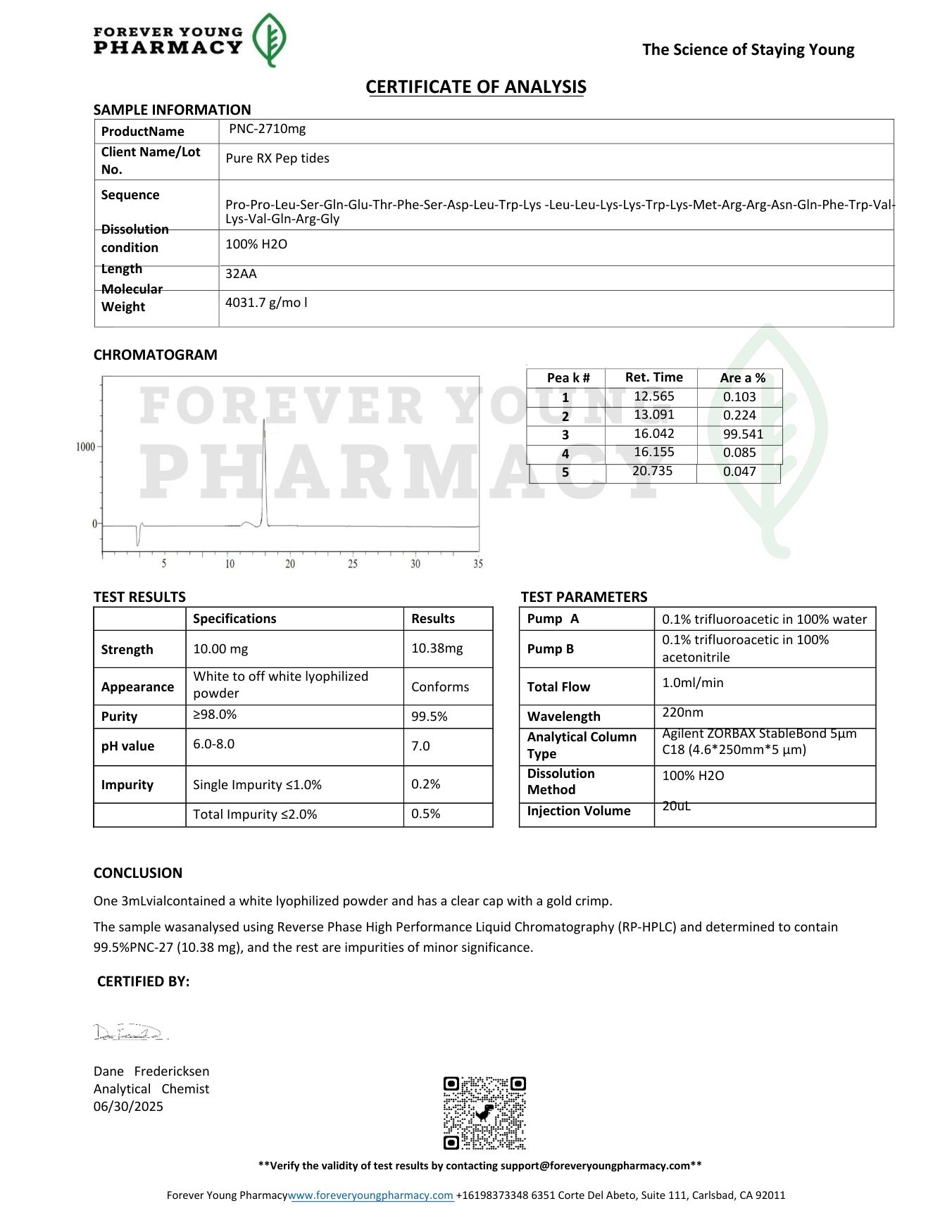
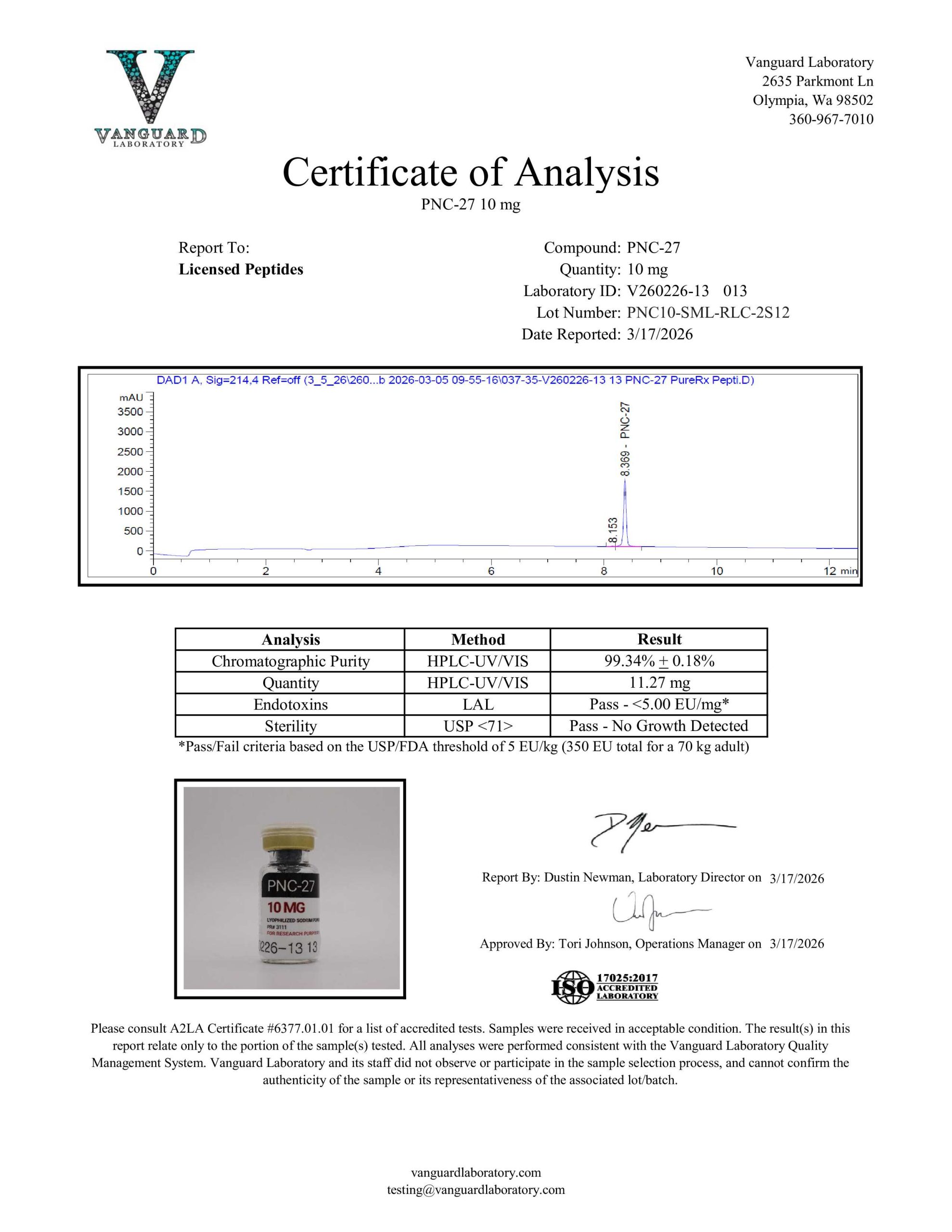
How can I verify the purity of my order? We provide HPLC and Mass Spectrometry (MS) analysis reports. These documents show the purity coefficient and the molecular weight peak. They confirm the absence of major impurities. Request these sheets from our support team when you order PNC-27 online.

Can PNC-27 be used in co-culture studies? Yes. It is highly suited for co-cultures. Because its action relies on membrane-bound HDM2, researchers often grow HDM2-expressing target cells alongside healthy cells that lack membrane-bound HDM2. This setup allows direct observation of selective membrane disruption in real-time.

What packaging is used for the 10MG variation? Our PNC-27 10MG variation comes in heavy-duty, clear borosilicate glass vials. They are sealed with a rubber stopper and an aluminum flip-off cap. This airtight, moisture-resistant setup protects the freeze-dried peptide until reconstitution.

Why is the lyophilized powder volume sometimes different between vials? The appearance or ‘cake’ of the powder can vary in volume or density between batches. This is normal for vacuum freeze-drying. It does not change the actual mass. Each vial contains exactly 10MG of highly purified PNC-27 peptide.

Accelerate Your Work with Champion Peptides

In high-stakes scientific research, there is no room for error. Champion Peptides supplies global research institutions, universities, and private laboratories with high-quality PNC-27. We do not cut corners.

Our simple online ordering system, rigorous quality control, and dedicated support make us a trusted choice for researchers worldwide. Secure your supply of premium PNC-27 10MG today. Move your cellular biology projects forward.

Additional information

Quantity

10 Vials, 15 Vials, 20 Vials

There are no reviews yet.

Be the first to review “PNC-27 10MG”

Your email address will not be published. Required fields are marked *

Share